How IMTT Helps You Start a CNC Computer Programmer Career in Ontario
Ontario’s manufacturing sector is hiring. The latest Labour Force Survey showed employment rise by 60,000 jobs, with manufacturing contributing nearly half of that total increase. Factories are expanding. Automation is accelerating. And companies need people who actually know how to run and program the machines behind it all.
If you have been thinking about building a career in manufacturing, this is the window you do not want to miss.
But here is the thing most people get wrong. They think showing up with a basic certificate is enough. It is not.
Ontario manufacturers are adopting automation, robotics, and smart CNC systems, and employers prefer machinists who are comfortable working alongside technology and evolving with it. That takes real training, not just theory.
This is exactly where IMTT comes in.
What Is IMTT Canada?
IMTT, short for the Institute of Machine Tool Technology, is based in Mississauga, Ontario. We train people for real jobs in precision manufacturing. Our focus is on hands-on learning, modern equipment, and career-ready skills that employers actually look for.
We are not a general trade school. Every program we offer is built around CNC machining, CAD/CAM design, and manufacturing technology. That focus makes a difference.
Our graduates work in aerospace companies, automotive plants, medical device manufacturers, and more. That is the kind of outcome we build toward every day.
Why a Career as a Trained CNC Computer Programmer Makes Sense Right Now
The salary range for CNC roles in Canada runs from $28 to $42 or more per hour based on experience, with Ontario offering some of the highest wage options in the country.
These are not short-term positions. Ontario is entering one of the most significant periods of industrial growth in its history, with rapid investment in electric vehicle battery plants, aerospace facilities, and precision machining operations. This makes the province a North American hub for advanced manufacturing.
At the heart of this transformation is CNC machining, a skilled trade that supports nearly every stage of modern production, from EV battery casings to turbine components in aircraft engines. The demand is growing for CNC computer programmers.
What We Teach at IMTT
We have multiple CNC programmes designed to help our succeed in high-demand industries as skilled professionals. The CNC Machine Tool Operator and Programmer diploma is a 42-week program that gives you everything you need to walk onto a shop floor and perform.
Here is what you actually learn:
- Blueprint reading and GD&T
- G-code and M-code programming for mills and lathes
- Mastercam for CAD/CAM toolpath design
- SolidWorks for 3D part modelling
- Multi-axis machine programming
- Precision measurement and metrology
- Machine setup, calibration, and safety
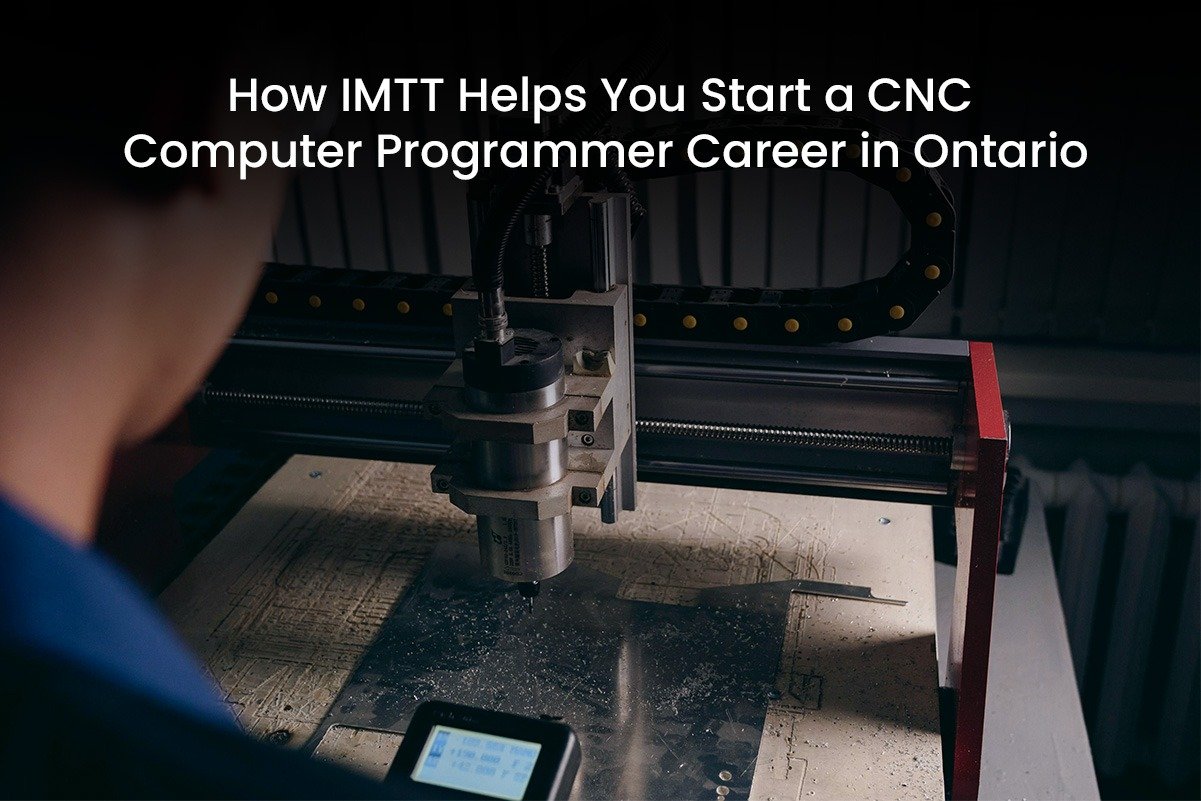
You do not just sit in a classroom reading about these things. You get over 500 hours of hands-on training in our fully equipped workshop using Fanuc-controlled CNC mills and lathes. That live shop floor experience is what separates our graduates from candidates with only online certificates.
The total program covers 1,250 hours of blended learning across theory, computer labs, and workshop practice. By the end, you have built skills, not just a credential.
Why Our Structured CNC Course Gets You Hired
A lot of people spend months trying to learn CNC on their own through YouTube videos and outdated textbooks. Some even take short weekend workshops that barely scratch the surface.
What they miss is structure.
Our CNC Programmer / Operator / Setup Certificate program is designed with one goal in mind: maximum employability. It combines technical theory with practical shop work so that by the time you finish, you can set up machines, write programs, and produce parts to tight tolerances.
Our CNC programs are designed around employer needs, not outdated curricula. You leave the CNC course with confidence and skills that employers recognise.
That last part matters. Knowing what Ontario employers actually want, and training you to deliver exactly that, is how we build successful graduates.
Supporting Your Journey Beyond the Classroom
We know that going back to school as an adult is not always easy. Life gets in the way. Money is a big concern. Schedules are complicated.
We have thought about all of that.
Our programs run in a hybrid format, with both online and in-person components, so you have flexibility without losing the hands-on learning that makes the training valuable. We also offer multiple start dates throughout the year, so you are not locked into a single intake window.
On the financial side, we connect students with options including Better Jobs Ontario funding, student lines of credit, and flexible payment plans. If cost has been holding you back, it is worth having a direct conversation with our admissions team about what applies to your situation.
The Bigger Picture: Why Skilled Trades in Ontario Are Worth Pursuing
People sometimes hesitate to enter a skilled trade Ontario because they think office jobs or tech roles carry more prestige. That thinking is changing fast.
Machinists and machining inspectors in Ontario earn wages between $18.75 and $39.00 per hour, with a median of around $28 per hour, and the demand for those who blend hands-on machining experience with digital skills continues to grow as manufacturing becomes more automated.
These are stable, well-paying careers. The work is tangible. You build things and solve real problems. And there is a clear path for advancement, from operator to programmer to setup technician to senior roles in quality control and production management.
CNC machinists today must be proficient in CAD/CAM programming for design and toolpath generation, programming and setup for CNC mills and lathes, precision measurement and metrology, and problem-solving as machines integrate with Industry 4.0 technologies. We teach all of it.
Is a Career as a CNC Programmer the Right Move for You?
If you are someone who likes working with your hands and your mind at the same time, enjoys precision work, and wants a career with income potential and strong job security, CNC machining is worth a serious look.
You do not need prior machining experience to start at IMTT. You need a high school diploma or equivalent, proficiency in English, and the motivation to commit to the required length of focused and structured learning.
What you get in return is a diploma, workshop experience, career guidance, and a direct path into one of Ontario’s most in-demand industries.
We have seen it happen again and again. Students who came in with zero machining background and left with serious opportunities. People who were stuck in jobs they disliked and found a new direction. Newcomers to Canada can build a career and a life here through the skills they learn at our campus.
The manufacturing sector in Ontario is not slowing down. The question is whether you will be ready when the right opportunity appears.
If you are serious about making a move, book a consultation with our team and find out whether our programs are the right fit for where you want to go.