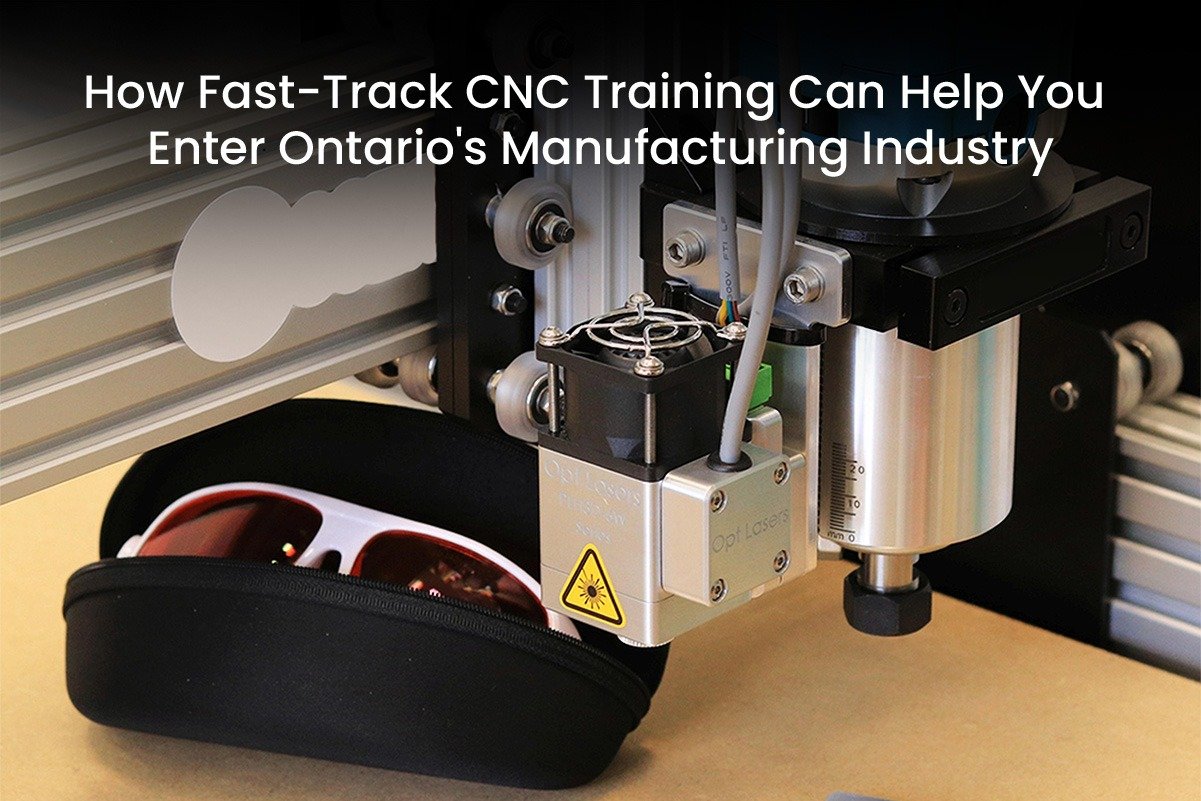
How Fast-Track CNC Training Can Help You Enter Ontario’s Manufacturing Industry
Most people think learning CNC machining takes years. It does not. Not anymore.
The old route was straightforward: sign up for a four or five-year apprenticeship, work your way up from the bottom, and hope the experience translates into a real job at the end. A lot of people never even started because the timeline felt too long.
Fast-track training changed that equation. And if you are serious about getting into manufacturing, understanding how it works is worth your time.
The Problem with Learning CNC the Long Way
It is tedious when people try to learn machining without a structure. They watch YouTube videos and pick up random techniques
They take a short weekend course that skips everything that actually matters on the shop floor. Or they land an entry-level operator job and spend two years running the same cycle without ever learning to program or set up a machine.
None of that moves you forward fast. Employers increasingly need CNC operators who can program and troubleshoot equipment, not just run it. That skills shift has pushed wages upward, particularly for operators with multi-axis and CAM software experience.
Running a machine is not enough anymore. You need to understand the full picture.
What Fast-Track CNC Machine Training Means
Fast-track does not mean cutting corners. It means removing the filler and focusing entirely on what matters.
A strong fast-track program compresses years of scattered learning into one structured curriculum. Theory, software, and hands-on machine time all run together instead of being spread across years. You build skills in layers, each module building on the one before it.
The difference between someone who finishes a fast-track program and someone who cobbled together knowledge over two years on the job comes down to one thing. Its depth. Structured training covers the gaps. Self-taught skills rarely do.
How Our 42-Week Program Is Structured
Our CNC Machine Tool Operator and Programmer diploma at IMTT is built around exactly this idea.
The program runs for 42 weeks, covering 1,250 hours of blended learning across theory, CAD/CAM computer labs, and live workshop sessions. Over 500 of those hours are spent on actual machines.
Here is what the curriculum covers:
- WHMIS regulations and CNC workshop safety
- Blueprint reading and GD&T
- Cutting tool theory and tool wear analysis
- G-code and M-code programming for mills and lathes
- Mastercam for multi-axis toolpath design
- SolidWorks for 3D part modelling
- Precision turning and milling to tight tolerances
- Machine setup, calibration, and metrology
That progression is what well-built fast-track CNC machine training looks like in practice. Every module builds directly on the one before it. Remember, course content may be changed anytime to align with industry standards. CNC machining with CAD/CAM skills is among the highest paid trade skills in Ontario’s manufacturing sector. By the time you finish, you are not just familiar with CNC work. You can do it.
For those who want a shorter entry point, our CNC Programmer/Operator/Setup Certificate is another option. It is a 23-week certification program. It focuses on the core operator and setup skills that manufacturers look for in new hires. This program is a strong starting point before moving into more advanced training.
Why the Hands-On Hours Matter So Much
Manufacturing employers can spot a candidate who has only read about CNC work within the first five minutes of an interview. They ask specific questions about setup, offsets, tool compensation, and troubleshooting. If you have not actually done those things, the answers show it.
Machine time builds confidence and muscle memory that classroom learning alone cannot replicate. When you have set up a lathe from scratch, written a program, run a part, measured it, and adjusted your offsets to hit tolerance, that experience travels with you into every shop floor you ever step onto.
That is the return on a structured fast-track program done properly.
Where a Well-Structured CNC Course Can Take You
Graduates move into roles across several industries. The skill set is wide enough to open multiple doors at once.
- Aerospace companies hire CNC programmers and setup technicians for high-precision component work
- Automotive suppliers need operators who can also troubleshoot and adjust programs on the fly
- Medical device manufacturers look for machinists
- Precision job shops take graduates who can handle both mills and lathes from day one
Some graduates start as operators and move into setup roles within months because they already have the programming knowledge. Others go straight into junior programmer positions.
A few move toward CAD/CAM design once they build on their SolidWorks experience. The career ceiling in CNC machining is higher than most people expect, and precision machining connects directly to industries that stay stable even when other sectors slow down.
Who Gets the Most Out of This Kind of CNC Training
Fast-track programs work best for specific types of people. Three groups tend to see the biggest payoff:
- Career changers who need to move quickly and cannot spend years transitioning. In under a year of focused training and you walk out with a diploma and an immediately usable skill set.
- Newcomers to Canada who want to enter a skilled trade without navigating a long apprenticeship system with which they are unfamiliar. One structured program gives you everything in one place.
- Recent graduates who want a direct path into well-paying trade work, rather than spending years in an unrelated role, waiting for something better.
No prior machining experience is required to start. A high school diploma, English proficiency, and the drive to show up and do the work are what actually matter.
Fast-track training asks something of you in return for the speed.
42 weeks of structured learning is not passive. You cover a lot of ground in a short time. The students who get the most out of it treat it like a job from day one. They do the reading, show up to workshop sessions prepared, and ask questions when something does not click.
The program is built to meet you where you are and push you forward. But the momentum you bring into it shapes how far you go when you come out.
Take the First Step
If you have been putting off getting into manufacturing because the traditional path felt too long, fast-track training is worth a serious look.
Book a consultation with our team and find out whether our program fits where you want to go. The conversation costs nothing. The clarity it gives you is worth a lot.