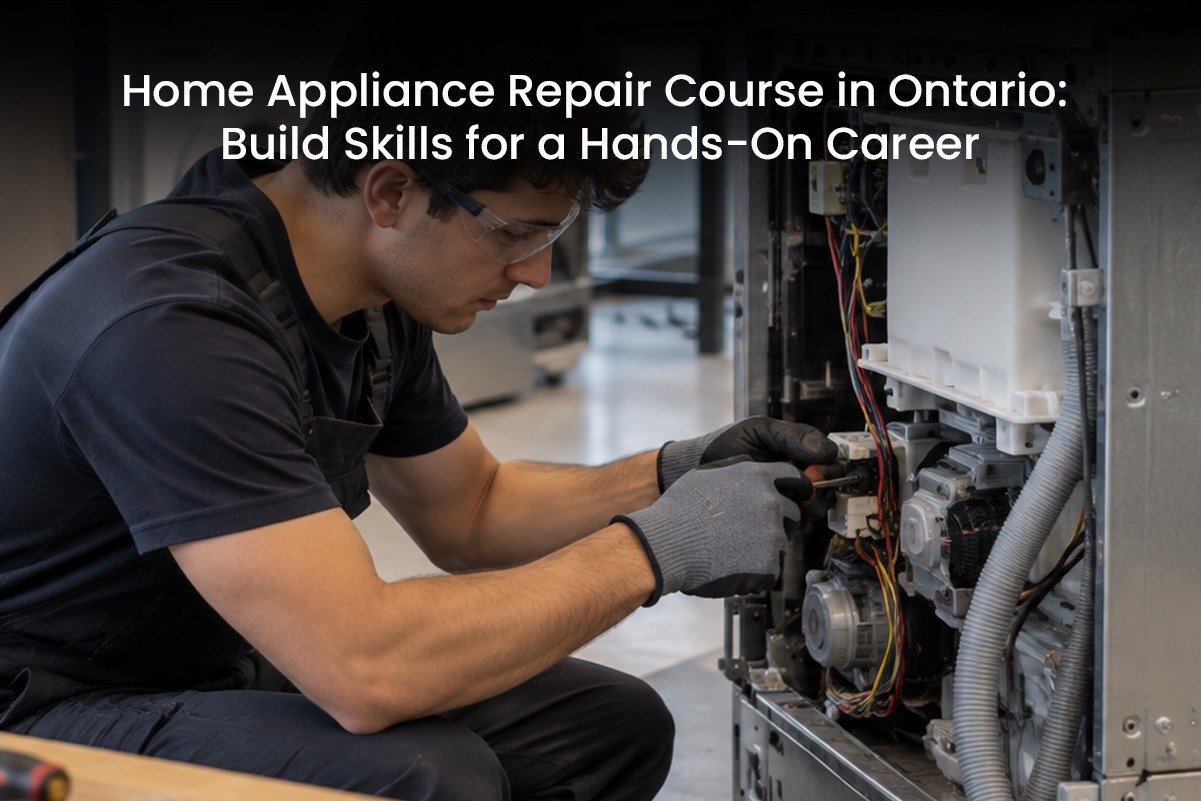
Home Appliance Repair Course in Ontario: Build Skills for a Hands-On Career
Appliances are part of everyday life. When a refrigerator stops cooling or a dryer stops heating, people need a technician who can find the problem and fix it.
For people interested in hands-on technical work, appliance service offers the opportunity to develop practical troubleshooting and repair skills used in homes every day.
If you are looking for a home appliance repair course in Ontario, choosing the right training means understanding the trade, the skills involved, and what an appliance repair course should teach.
This guide explains appliance service work in Ontario, typical wages, training areas, career options, and how IMTT Canada’s Appliance Service Technician Certificate Program is structured.
What Is an Appliance Service Technician?
Appliance service technicians install, maintain, diagnose, and repair household appliances. The work can involve electrical systems, electronic controls, mechanical components, refrigeration systems, and water and air systems.
Skilled Trades Ontario describes the trade as covering appliances such as refrigerators, dishwashers, washers, dryers, and ovens. Technicians may read wiring diagrams and service manuals, test components, identify faults, replace defective parts, and check that equipment operates correctly.
The occupation is classified under NOC 72421, Appliance servicers and repairers. Job Bank includes domestic and commercial appliance service and repair within this occupational group.
Appliance Technician Wages in Ontario
According to Job Bank Canada, appliance servicers and repairers in Ontario earn a median wage of $27.00 per hour.
Job Bank also reports that close to 46% of people in this occupation are self-employed, compared to 15% across all occupations. Technicians may work for appliance repair companies, service departments, retailers, wholesalers, or operate as self-employed technicians.
What a Home Appliance Repair Course Should Cover
A good home appliance repair course should build technical knowledge before moving into more complex troubleshooting.
IMTT Canada’s Appliance Service Technician Certificate Program covers various subject areas:
- Safety practices, since technicians work with electricity, water lines, and sealed refrigeration systems
- Electrical fundamentals and electronics, the base knowledge behind every appliance
- Appliance electrical systems, including wiring diagrams and control boards
- Water and air systems used in dishwashers, washers, and dryers
- Refrigeration systems for fridges and freezers
- Hands-on repair training across household appliances
Combining technical knowledge with practical training helps students develop the troubleshooting and repair skills used in appliance service. This structure gives students exposure to the main technical areas involved in appliance service.
Inside Our Appliance Service Technician Program
At IMTT Canada, our program runs 24 weeks in a hybrid delivery format, combining online coursework with in-person training at our Mississauga campus. The full program totals 480 hours across seven modules.
|
Subject |
Instruction Hours |
|
Introduction to Appliance Service |
20 |
|
Safety Practices and Procedures |
40 |
|
Fundamentals of Electricity and Electronics |
80 |
|
Appliance Electrical Systems |
80 |
|
Water and Air Systems in Appliances |
60 |
|
Refrigeration Systems |
80 |
|
Specific Appliance Training |
120 |
Of the full 480 hours, 282 hours go toward hands-on training. That works out to close to 59% of the program spent working directly with appliances, tools, and diagnostic equipment, rather than sitting through lectures alone.
Admission Requirements
Getting into our program stays straightforward. You need a Grade 12 diploma or equivalent GED, a minimum age of 18, and basic English language proficiency. These requirements keep the trade accessible for people entering the workforce for the first time and for anyone changing careers later in life.
What Jobs Can You Pursue After Training?
The program can help prepare students for a variety of roles across the appliance service industry.
- Appliance Service Technician
- Appliance Repair Technician
- Warranty Service Technician
- Residential Appliance Installer
- Maintenance Technician
- Appliance Service Contractor
The program outline describes technicians as working with residential appliances and performing tasks such as interpreting wiring diagrams, using diagnostic equipment, identifying faulty components, repairing systems, and replacing defective parts. The actual job title and responsibilities can vary by employer.
Is Appliance Repair a Good Skilled Trade to Consider in Ontario?
Appliance repair can suit people who prefer practical, technical work over a desk-based role.
The work combines troubleshooting with hands-on repair. A technician may need to understand electrical systems, identify a failed component, use testing equipment, and complete a repair while following safety procedures.
There is also more than one employment route. Job Bank notes that appliance servicers and repairers can work for repair companies, appliance service departments, retailers, wholesalers, or as self-employed technicians.
What Is Included in the Program?
Our program fees cover all textbooks, supplies, and required certifications. Some components may be delivered online through computer-assisted learning, while others involve direct instructor support on campus. Course order can shift slightly depending on scheduling, though the total hours and subject coverage stay consistent for every student.
Take the Next Step Toward This Career
A structured appliance repair course can help you develop the technical knowledge and practical skills relevant to appliance service and repair. Our Appliance Service Technician Certificate Program combines focused theory with extensive practical training, so graduates acquire the skills needed to perform job-related duties effectively.
If you want the full program breakdown or want to speak with our admissions team, book a free consultation or reach out at admissions@imttcanada.com.