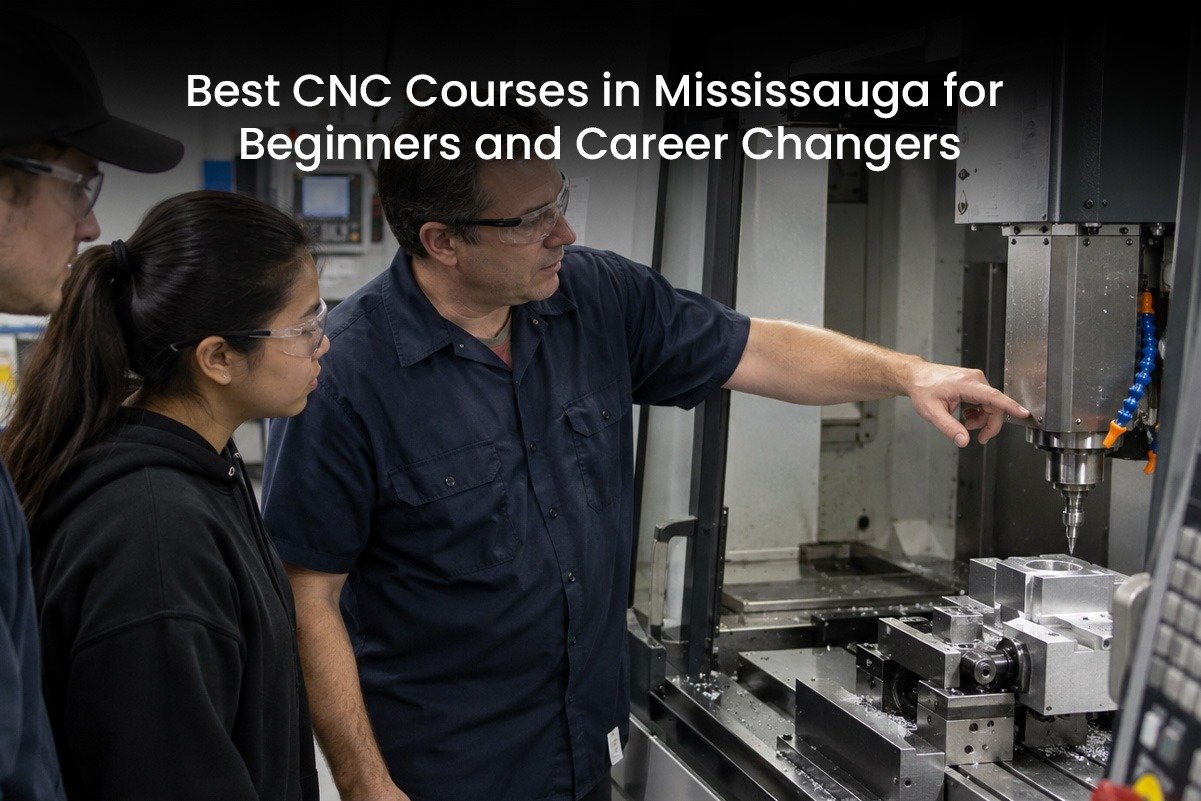
Best CNC Courses in Mississauga for Beginners and Career Changers
Career transition could be seen as a major move, especially if the individual is considering an industry that he or she has no experience in. CNC Machining is a career path that can be considered by individuals who would like to enter manufacturing.
For beginners, the challenge is finding training that starts with the basics and builds practical skills. IMTT Canada has CNC programs in Mississauga of various lengths and focuses. This enables students to compare their options before selecting a course.
What to Know Before Choosing a CNC Course
CNC stands for Computer Numerical Control. It refers to machines that follow programmed instructions to cut, shape and finish materials with precision. These machines are used in manufacturing industries where components must meet specific measurements.
There’s more to working with CNC equipment than simply pushing buttons. Students learn technical drawings, machine setup, cutting tools and programming instructions. The right course will help them gain this knowledge gradually.
Beginners may prefer a longer program that covers machining fundamentals and programming. People who already have related experience may want focused training in machine operation or setup.
CNC Training Options at IMTT Canada
Our programs cover different parts of CNC machining, from machine operation to programming and computer-aided manufacturing. Here are three options worth considering.
CNC Machine Tool Operator & Programmer Diploma
The CNC Machine Tool Operator & Programmer program is a 42-week diploma designed to develop a broad foundation in machining and CNC programming.
The program includes 1,250 hours of training. It has 500 hours of machine lab training. Students work with CNC mills and lathes and learn to use industry-standard software. Here are the key subjects include:
-
CNC setup, operation and programming
-
Blueprint reading and precision measurement
-
G-code and M-code programming
-
Mastercam for mills, lathes and multi-axis applications
-
SOLIDWORKS and CAD/CAM systems
-
CNC machines with Fanuc controls
This could be an appropriate choice for beginners who would like to learn multiple aspects of machining in one training program. It would also allow people changing their careers to develop their technical skills before moving into professional positions.
CNC Programmer / Operator / Setup Certificate
The CNC Programmer / Operator / Setup Certificate runs for 23 weeks and includes 690 hours of training.
It covers CNC programming, machine setup, operation and precision machining. Students study blueprint reading, geometric dimensioning and tolerancing, CNC-related mathematics, tooling and offsets. The curriculum also includes Mastercam and SOLIDWORKS.
This certificate is a quicker way into CNC machining. It’s shorter than the diploma and more focused. You’ll learn programming, setup, and machine operation. It suits students who want job-ready skills fast.
The program uses a hybrid format, combining online learning with in-person practical training in Mississauga.
CNC Mill Operator & CNC Lathe Operator Certificate
Some students want to concentrate on operating machines rather than study a broader range of CNC subjects. Our CNC Mill Operator & CNC Lathe Operator programs provide focused, hands-on training.
Each training stream runs for 39 hours and takes place in person at our Mississauga campus. Students learn safe workshop practices, Fanuc control basics, tooling, offsets and G-code and M-code fundamentals.
The training also includes machine labs and practical projects. Students can choose the milling or turning stream based on their interests and training goals.
Skills You Can Build Through CNC Training
CNC machining combines digital instructions with physical manufacturing. Students need to understand both sides of the process.
Blueprint reading and measurements
Technical drawings communicate the dimensions and specifications of a part. Students learn to interpret these drawings and understand the measurements needed for accurate machining.
Programming fundamentals
A CNC machine follows instructions written as code. You’ll learn how to write those instructions. Then you’ll use them to cut and shape real parts, like metal pieces and tools.
Machine setup and operation
Before a machine starts cutting, it needs to be set up properly. You’ll learn how to load the right tools and tell the machine exactly where the material sits. Good setup means every part comes out the right size and shape.
CAD/CAM software
Software such as Mastercam helps users create machining toolpaths. SOLIDWORKS supports 3D modelling and design. Learning these tools helps students understand how digital designs connect with manufacturing processes.
At IMTT Canada, these subjects form part of our wider CNC training options. The exact skills covered depend on the program you choose.
Career Opportunities After CNC Training
CNC training can prepare students to pursue roles in machining and manufacturing. Potential career paths include CNC mill operator, CNC lathe operator, setup technician, machining tool operator and CNC programmer.
Some roles focus on running machines and checking finished components. Others involve preparing equipment or creating and adjusting programs. The responsibilities depend on the position, the employer and the worker’s experience.
A CNC programmer works with instructions that control machining operations. This role requires an understanding of programming, part specifications and the machining process. Students interested in this direction should compare programs based on the programming content and practical experience they provide.
Manufacturing careers also vary in pay. People researching the highest-paid trade skills should compare current wages by occupation, experience level and location rather than assume that one course leads directly to a particular salary. Completing training does not guarantee a specific position or income.
How to Choose the Right Program
Before enrolling, consider how much training you need and which skills you want to develop. A longer diploma covers a wider range of subjects, while a shorter certificate concentrates on specific areas.
Check these details when comparing courses:
-
Total training hours and program duration
-
Practical workshop time
-
Programming and software subjects
-
Admission requirements
-
Training format and campus location
IMTT Canada’s programs are offered in different formats. The diploma and programmer/operator/setup certificate use a hybrid format, while the mill and lathe operator programs involve in-person workshop training.
Our programs page provides an overview of the available options. You can compare the course details and decide which path fits your goals.
Start Your CNC Training Journey
Choosing a CNC career is a big step. It helps to know what the training involves first. Look at the curriculum, the hands-on hours and the course requirements. Then decide.
At IMTT Canada, we offer CNC training options for students who want to build machining, programming or machine operation skills in Mississauga. If you are unsure which course suits your background, book a free consultation with our team to discuss the available programs and your training goals.