Learn the Highest Paid Trade Skills in Canada with Hands-On Training
Canada is one of the world’s busiest manufacturing nations. Factories, production plants, and industrial facilities here are constantly hiring. But they are not just hiring anyone. They want people with specific, practical skills. People who can walk in, operate a machine correctly, and produce accurate work from day one.
That gap between what employers need and what most job seekers offer is exactly where a good training program makes the difference.
What Skills Are Actually in Demand Right Now?
It helps to understand what the market is asking for before you invest time in any training. The manufacturing sector is growing and employers are struggling to fill technical roles fast enough. The roles with the most demand also tend to offer the strongest pay and long-term stability. Knowing what the highest paid trade skills look like on a shop floor helps you make a smarter decision about where to focus your training.
Three areas are consistently in high demand:
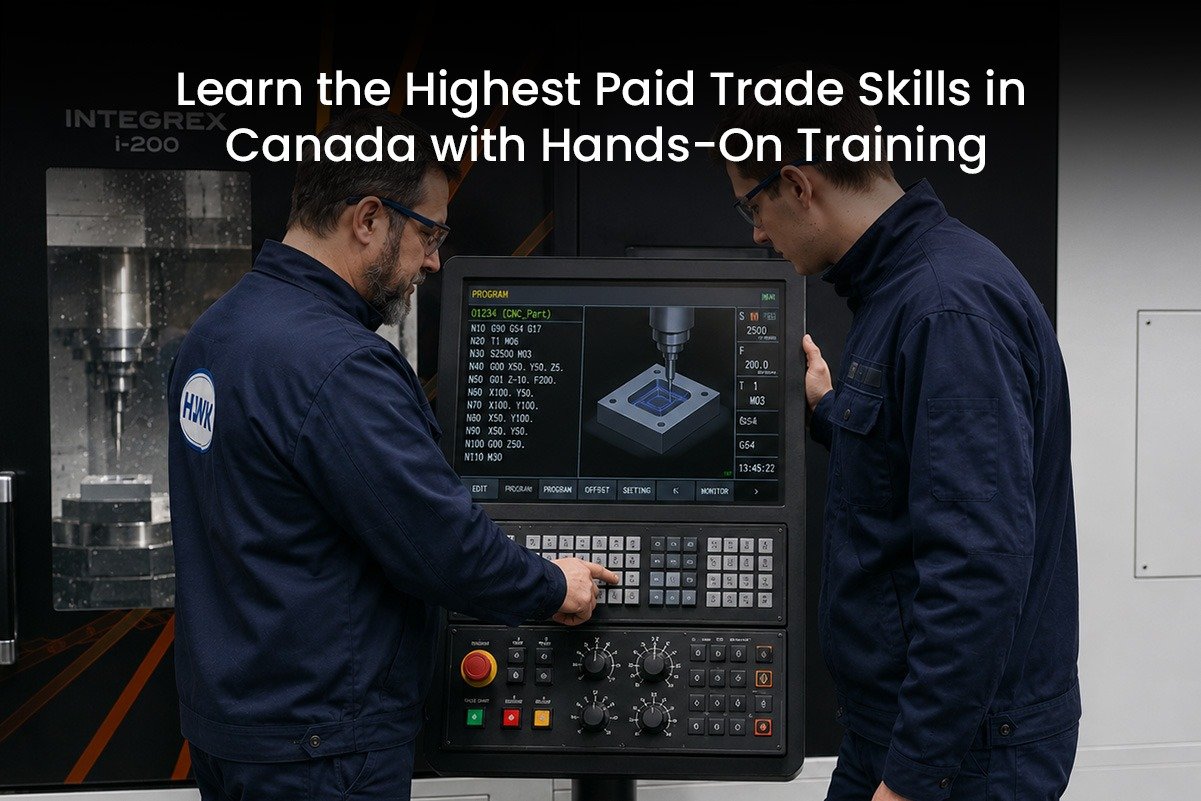
- CNC Programming: This entails creating codes that direct a machine in the process of cutting, drilling, or shaping a component. There is a need for personnel who can analyze a blueprint and create the necessary codes for operations. CNC programming is technically oriented and earns good pay.
- Machine Setup and Operation: Setting up a machine correctly before production starts is critical. One wrong setting produces hundreds of bad parts. Skilled setup operators save companies significant time and money, which is why they are valued and paid accordingly.
- CAD and CAM Software: Tools like SolidWorks and Mastercam are used to design parts and plan how machines will cut them. Knowing these tools makes you useful at multiple stages of production, not just one.
Employers across Ontario are actively searching for people trained in all three of these areas. The shortage is real and the hiring is consistent.
Why Hands-On Training Produces Better Results
Reading about a machine and actually running one are two completely different experiences. Most people figure that out quickly when they step onto a shop floor for the first time. Theory gives you a foundation. Practice builds the confidence that employers actually notice in interviews and on the job.
Training programs that put you on real machines from early on produce faster learners. You develop feel, judgment, and speed that only comes from repetition. That is what makes a graduate hireable from day one rather than someone who still needs months of on-the-job learning before they contribute.
Programs That Build Real, Job-Ready Skills
At IMTT Canada, we built our programs specifically around what employers in Canada are hiring for. Every program runs in a fully equipped workshop where students train on actual CNC machines, not simulations or diagrams on a screen.
Our CNC Machine Tool Operator and Programmer program covers the full picture. Students learn setup, operation, and programming together. This combination makes graduates more flexible and more attractive to employers who want one person to handle multiple responsibilities.
We also offer the CNC Mill Operator and CNC Lathe Operator certificate for students who want to focus on specific machine types. Both mills and lathes are core equipment in manufacturing facilities across the region.
For students interested in the design and software side, our SolidWorks Certificate and Mastercam Training programs develop skills that sit at the intersection of engineering and production.
Who Is This Training Actually For
These programs work well for a wide range of people. Some arrive with no manufacturing background at all. Others come from the trades and want to move into higher-paying, more technical roles. Both groups benefit from structured, hands-on learning.
New graduates who want a clear path into a stable career find that trades training opens doors faster than many other routes. The hiring timelines are shorter, the pay scales up quickly, and the work is concrete and skill-based.
Career changers represent a large portion of people entering trades training today. Many of them are coming from industries where the work felt unstable or the pay was not growing. Manufacturing offers both stability and growth if you have the right skills.
What the Learning Experience Actually Looks Like
Students at IMTT Canada spend meaningful time on machines every week. The classroom component covers the theory and technical knowledge you need to understand what you are doing and why. The workshop time is where that knowledge becomes skill.
- Class sizes are kept small so instructors can work with students individually.
- Students practice on the same types of machines they will use in actual jobs.
- Programs are designed to move at a pace that builds confidence, not just speed.
- Career support is available to help graduates connect with employers after completing their program.
This structure prepares graduates to contribute from day one, with the skills and confidence needed to step into the role and add value quickly.
Ready to Take the First Step Toward a Stronger Career?
Choosing the right training program is one of the most practical decisions you can make for your career. The trades market in Canada is not slowing down. Every month that passes is another month of earning potential left on the table.
Book a free consultation with us to learn which program fits your background and goals. We will walk you through the options, timelines, and financial aid available so you can make a clear, confident decision.
Is There Financial Support Available for Trades Training?
Cost is the first concern most people raise when they look at training programs. It is a fair concern. But there are more options available than most people realize.
Ontario offers funding programs specifically designed to help people train for high-demand careers. These programs cover portions of tuition for eligible applicants and exist precisely because the province needs more skilled tradespeople in the workforce.
At IMTT Canada, we have a dedicated financial aid page that outlines what support is available and how to apply for it. Many of our students access funding that significantly reduces their out-of-pocket costs.
Beyond government funding, flexible payment options also exist. The goal is to remove cost as the barrier stopping you from a better career. The best paying skilled trade jobs pay back that investment quickly once you are working in the field.
Canada’s Manufacturing Market Is Not Waiting
Canada’s industrial sector keeps expanding. New facilities open, existing ones scale up, and the demand for trained operators and programmers keeps climbing. Companies are not waiting for the talent pool to catch up. They are hiring whoever they can find with the right skills.
That urgency creates a real opportunity for anyone willing to train now. The window is open. The jobs are funded, stable, and growing.
If you have been thinking about making a move into skilled trades, this is the moment to act on it. Explore our full list of programs and find the one that matches where you want to go. Your next career step is closer than you think.