How to Use Better Jobs Ontario to Land a High-Paying Technical Job
Changing careers at 30, 40, or even 50 is not a setback. For many people, it is the smartest move they have ever made. Your first career teaches you discipline and a work ethic. Your second career puts those qualities to work somewhere that actually pays what you deserve.
Ontario is a strong province to make that shift. Manufacturing and technical industries here hire consistently. The demand is not seasonal. It is structural.
The only question is which direction to move and how to get there without wasting time or money.
Why Technical Trades Attract Career Changers
People switch into technical trades for different reasons. Some are tired of unstable industries. Some hit a salary ceiling with no clear way past it. Others want work that feels real and tangible. Work where you can actually see what you built at the end of the day.
What draws most career changers to technical roles is simple. Reliable income and short training timelines. You do not spend three or four years retraining. Most programs take months. You build the skill and start earning in a new field quickly.
Technical work also ages well. Experienced operators and programmers grow more valuable over time. That is a very different trajectory from white-collar roles where experience eventually gets priced out by younger, cheaper hires.
What Is Better Jobs Ontario?
Better Jobs Ontario (formerly the Second Career program) is a Government of Ontario initiative designed to help laid-off and unemployed workers get back into the workforce through funded skills training.
If you qualify, the program can cover a wide range of costs, including tuition, books, supplies, transportation, and even a basic living allowance of up to $500 per week. Depending on the length of your training, you can receive up to $28,000 for programs one year or less, or up to $35,000 for programs up to two years in duration.
Additional support may also be available for childcare, disability-related needs, and language training.
You may be eligible if you have been laid off and are not currently working, are in a temporary job just to cover costs after a layoff, or have been unemployed for 12 weeks or longer and belong to a low-income household. You can still apply even if you are receiving Employment Insurance (EI), Ontario Works (OW), or the Ontario Disability Support Program (ODSP).
Lost a job recently? Left a shrinking industry? Been underemployed for a while? It is worth checking whether you qualify. The financial aid options at IMTT Canada include guidance on government funding and how to navigate the process without getting lost in paperwork.
The Technical Skills Employers Are Paying For
Not all technical skills carry the same market value. Some are niche. Some are oversupplied. The ones worth training for sit at the intersection of high employer demand and low talent supply.
A few areas stand out clearly right now:
- CNC programming and operation roles sit among the highest-demand positions in Ontario’s manufacturing sector. Companies run these machines around the clock and need people who can set them up, run them, and fix problems without supervision.
- CAD and CAM software skills have become essential in modern manufacturing. People who can design a part and translate it into machine instructions get hired faster and paid more.
- Machine setup and quality control roles require precision and technical judgement. These positions are harder to automate, which gives them strong long-term job security.
These are not entry-level roles with capped salaries. Skilled trade Ontario workers with CNC experience regularly earn well above average manufacturing wages. Pay grows with experience.
Why Hands-On Training Works Better for Career Changers
Career changers cannot afford slow learning curves. They need to become competent fast and show that competency to employers from day one. That is why program format matters more for second-career students than for fresh graduates.
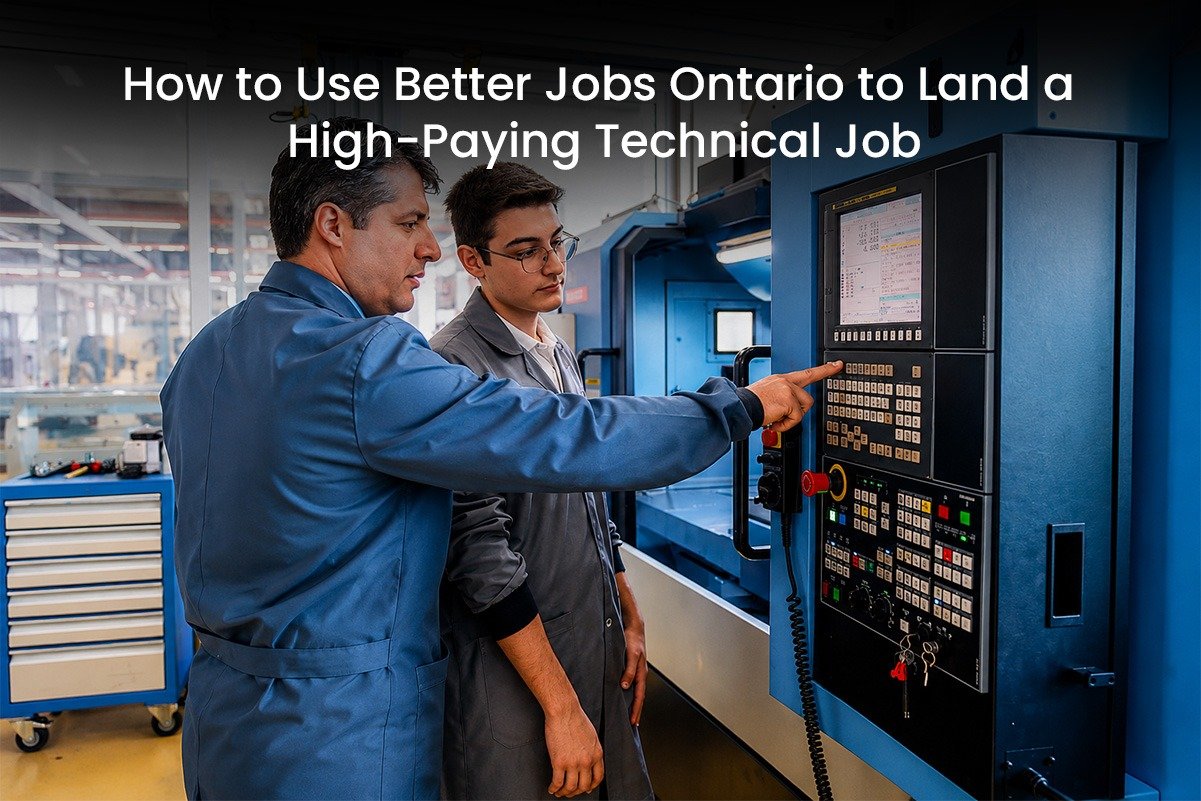
Classroom theory alone does not build the confidence employers notice in an interview. Real machine time does. When you have spent hours on actual equipment, it shows. It shows in how you talk about the work, how you answer technical questions, and how fast you settle into a new workplace.
At IMTT Canada, our programs are built around hands-on workshop time on CNC machines. Students from completely unrelated backgrounds regularly finish training and land manufacturing roles within weeks of graduating.
Adults learn best by doing. Career changers, especially. The right environment simply gives them the space to do it properly.
How to Choose the Right Program for Your Situation
Picking a program without a target role in mind is a common mistake. Start with where you want to land. Then work backwards.
Do you like hands-on problem solving? Operator and setup roles are a strong fit. Programming roles may suit you better if you are comfortable with computers and logic. Prefer the design and planning side? CAD and CAM software skills open doors in engineering-adjacent positions. So there are multiple options for you.
The right program for one person is not automatically right for another. Your background, goals, and financial situation all shape which path makes the most sense. It’s best to consult with experts in the field. So if you are going into CNC, you should talk to our team first.
Making the Career Change Without Second-Guessing Yourself
The hesitation before a career shift is completely normal. You are leaving something familiar and investing time and money. But think about what staying in a stagnant career actually costs over five or ten years.
People who complete quality CNC machinist training regularly say it was faster and smoother than they expected. The skills are learnable. Employers are ready. The pay is real from the start.
If you are seriously thinking about a career in technical trades, book a consultation today. We will help you figure out which program fits your background, whether you qualify for funding, and what a realistic timeline looks like for your situation.