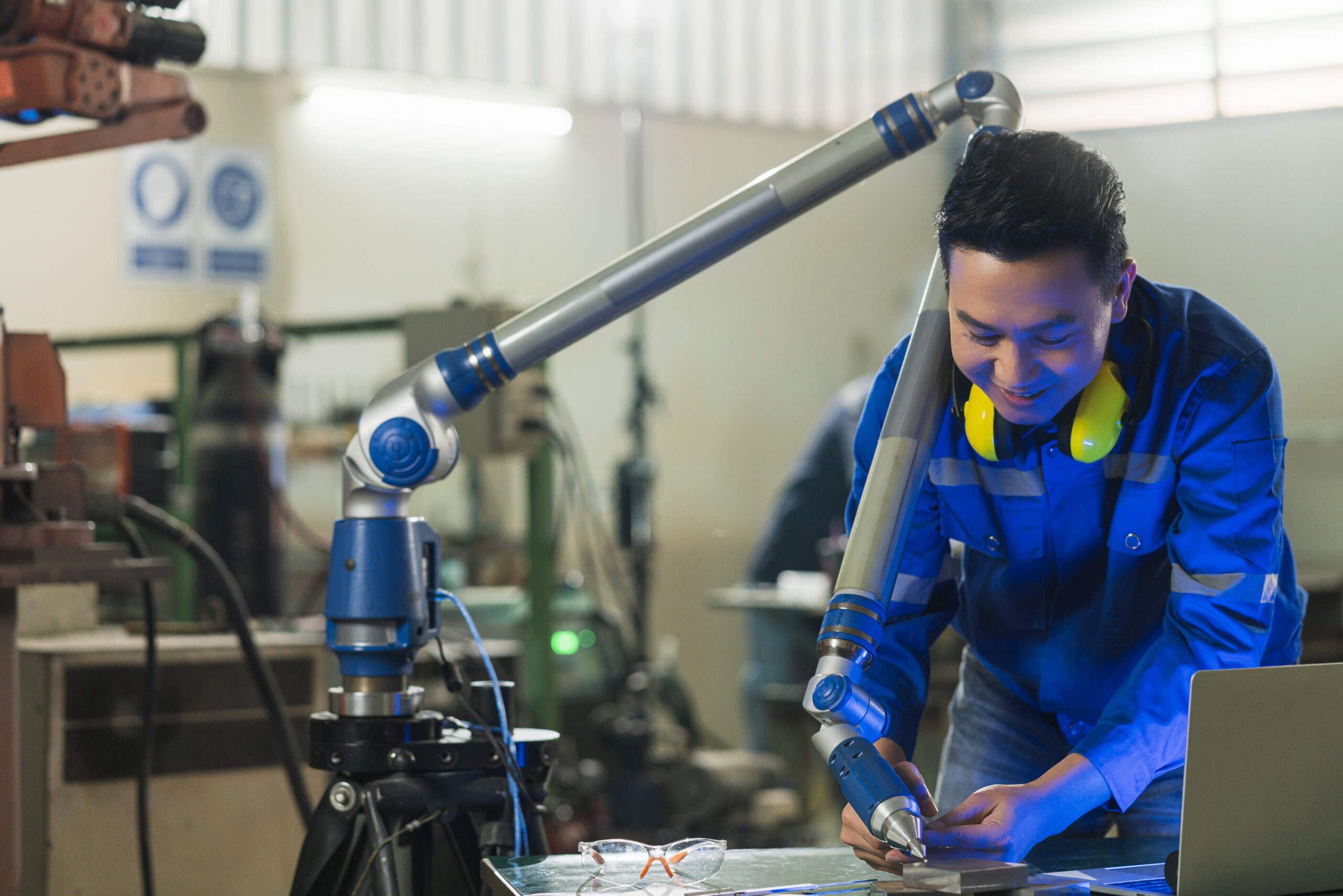

The role of the CNC machinist has evolved significantly over the past decade. Today’s manufacturing environment demands more than machine operation or basic programming skills. As Ontario’s manufacturing sector becomes increasingly automated, digital, and design focused, employers now expect machinists to understand the entire production workflow, from blueprint interpretation to CAD design and CAM programming.
CAD/CAM training has become a critical requirement in modern manufacturing. Machinists who can connect design intent with precise machining execution are more efficient, more accurate, and more valuable to employers. This is especially true in industries such as aerospace, electric vehicle manufacturing, medical devices, and precision tooling, where digital accuracy and consistency are essential (MDA Ltd.).
At the Institute of Machine Tool Technology (IMTT), CNC training is designed to reflect this industry shift. Programs integrate blueprint reading, SolidWorks design, Mastercam programming, and hands-on machining to prepare students for real shop floor expectations.
CAD/CAM Skills Are Now Essential for CNC Machinists
Modern CNC machine shops operate in a digital first environment. Parts are designed, simulated, and optimized long before material reaches the machine. CAD and CAM software play a central role in reducing errors, minimizing scrap, and improving production efficiency.
SolidWorks allows machinists to create precise 3D part models, while Mastercam converts those designs into CNC ready toolpaths. When machinists understand both systems, they gain full visibility into the machining process. This enables better planning, fewer setup issues, and improved accuracy during production.
Industries that demand tight tolerances and high repeatability rely heavily on CAD/CAM workflows. As a result, machinists with strong digital skills are in higher demand across Ontario’s advanced manufacturing sector (3ERP).
Why Blueprint Reading and GD&T Skills Matter More Than Ever
Blueprints remain the foundation of every CNC job, but modern drawings are more complex than ever before. Today’s prints include detailed surface finish requirements, complex geometries, and advanced geometric dimensioning and tolerancing (GD&T).
Understanding GD&T allows machinists to interpret design intent accurately, select proper datums, and apply the correct machining strategies. Without these skills, even well programmed parts can fail inspection or require costly rework.
Employers increasingly expect CNC machinists to bridge the gap between design and production. This is why CAD, CAM, blueprint reading, and GD&T training are now essential components of modern machining education (MDA Ltd.).
How CAD/CAM Skills Support Career Growth and Higher Earning Potential
CNC machinists with strong CAD/CAM capabilities often advance more quickly in their careers and earn higher wages. These professionals are trusted with complex parts, tight tolerances, and production critical responsibilities.
Employers value machinists who can:
- Program parts directly from CAD models
- Simulate toolpaths to reduce setup time and material waste
- Develop efficient machining strategies for complex geometries
- Modify designs to improve manufacturability
- Manage prototype to production transitions
Because these skills improve productivity and reduce costly errors, CAD/CAM trained machinists are often among the most sought after and highest paid technicians on the shop floor.
How IMTT Prepares Students for CAD/CAM Driven CNC Careers
IMTT’s training approach is built around real industry workflows and employer expectations.
- Integrated CAD/CAM Training: Students learn SolidWorks and Mastercam alongside hands-on CNC machining, building a strong connection between design and production.
- Blueprint Reading and GD&T Training: Programs emphasize blueprint interpretation and GD&T, ensuring students understand how tolerances and specifications affect machining outcomes.
- Experienced Industry Instructors: IMTT instructors bring extensive real world machining and programming experience, offering practical guidance and mentorship.
- Industry Standard Software and Equipment: Training uses the same CAD/CAM tools and CNC machines found in leading manufacturing facilities across Ontario.
- Job Ready Skill Development: Graduates leave with a balanced skill set that combines technical machining expertise with digital design and programming proficiency.
Start Your CAD/CAM Training at IMTT
Ontario’s manufacturing industry needs CNC machinists who can think digitally, program efficiently, and operate confidently in advanced production environments. CAD/CAM skills are no longer optional. They are essential for long term career success in modern machining.
The Institute of Machine Tool Technology provides the hands-on training, industry aligned curriculum, and practical experience needed to succeed in today’s CNC workforce.
📞 1-855-889-4688
🔗 Explore CNC Programs: https://imttcanada.com/programs