
How to Build a Successful Career in Canada’s Skilled Trades Industry
Canada’s skilled trades industry is growing and the demand for trained workers is not slowing down. Employers across the country are actively looking for people who are ready to work, not just people who have a certificate.
The question is not whether the opportunity is there. The question is how you actually get yourself ready to take it. That starts with understanding what the industry needs and making smart decisions early.
Start by Understanding Where the Opportunities Are
One of the first steps in building a successful trades career is understanding where demand exists.
Ontario remains one of Canada’s largest manufacturing hubs, supporting industries such as:
- Aerospace
- Automotive
- Medical device manufacturing
- Industrial equipment production
- Precision machining
Ontario is one of the strongest markets in the country right now. Skilled trade Ontario employers are hiring across manufacturing, precision machining, and industrial sectors. Starting your career here means stepping into a market that is genuinely looking for people like you.
Before choosing a career path, research local labour market trends and identify industries with long-term growth potential.
Choose Training That Leads to Employment
Picking the right training program is one of the most important decisions you will make. Not every program prepares you for what employers actually want. The quality of your training can significantly impact your future career opportunities.
Before you commit to anything, think about a few things:
- Does this program include hands-on practice with equipment used on actual job sites?
- Are employers in your area hiring people with this specific training?
- Do students from this program find work in their field after finishing?
- Will this credential be recognised by Ontario employers?
These questions matter. Many students skip them and regret it later. At IMTT Canada, our CNC Machine Tool Operator Program and CNC Programmer / Operator / Setup Certificate programs are built around what Ontario manufacturers are mostly looking for.
Students develop practical skills in CNC machine operation, machine setup, blueprint reading, precision measurement, G-code programming, SolidWorks, and Mastercam.
The goal is simple: help students build the confidence and technical abilities needed to succeed in the workplace.
Develop Skills Beyond Basic Machine Operation
Modern manufacturing requires more than simply operating equipment. Today’s employers value workers who understand the entire manufacturing process.
Some of the most valuable skills include:
- CNC machine operation
- CNC programming
- Blueprint reading
- Precision measurement and inspection
- CAD/CAM software knowledge
- Problem-solving
- Communication and teamwork
Students who combine technical knowledge with hands-on experience often stand out during the hiring process.
Does Your Attitude Matter as Much as Your Skills?
Talk to any hiring manager in the trades and they will tell you the same thing. Skills get you in the door. Your attitude determines how far you go once you are inside.
Employers consistently value individuals who demonstrate:
- Reliability
- Punctuality
- Accountability
- Professionalism
- Willingness to learn
The people who build strong reputations early in their trades careers tend to share a few common traits. They are consistent and communicate clearly. They take responsibility when something goes wrong instead of pointing fingers. None of this is complicated but it is surprisingly uncommon.
What Habits Set Successful Tradespeople Apart
Building the right habits early shapes everything that follows. These are not complicated. They just take consistency.
- Punctuality: Being on time sounds basic. But it builds trust fast. Supervisors notice who shows up ready and who does not. That reputation sticks.
- Attention to detail: One missed measurement can mean a scrapped part. Checking your work before signing off is not extra effort. It is the job.
- Continuous learning: Tools change and processes change. The people who stay curious keep moving forward. The ones who stop learning get left behind slowly.
- Communication: Speak up when something seems off. Ask when you are unsure. A quick question saves hours of rework. Good teams are built on this.
- Ownership: Things go wrong sometimes. How you handle it matters more than the mistake itself. Taking responsibility builds your reputation faster than anything else will.
These habits sound simple on paper. Living them daily is what separates people who advance from people who stay stuck at the same level for years.
Nobody talks about this enough when advising students. The technical skills are important. But these habits are what employers remember and what gets you promoted.
Who you train with matters as much as what you train in. Two people can study the same subject and come out with very different levels of readiness depending on where they trained. At IMTT Canada, we focus on practical, employer-driven training. Our programs are built around what students will actually face on the job.
We stay in regular contact with industry. We know what Ontario employers are hiring for right now. That knowledge shapes how we teach and what we cover.
Our goal is simple. We want our students walking into their first role feeling prepared, not overwhelmed.
What Does a Long-Term Career in the Trades Actually Look Like?
A lot of people think of trades as a starting point with nowhere to grow. That could not be further from the truth.
Many tradespeople start in production roles. Within a few years they move into senior operator positions, team lead roles, or technical specialist work. The path forward exists. You just have to perform well enough to reach it.
Many workers begin as operators or technicians before advancing into roles such as:
- CNC Programmer
- Setup Technician
- Quality Control Specialist
- Team Lead
- Manufacturing Supervisor
- Production Manager
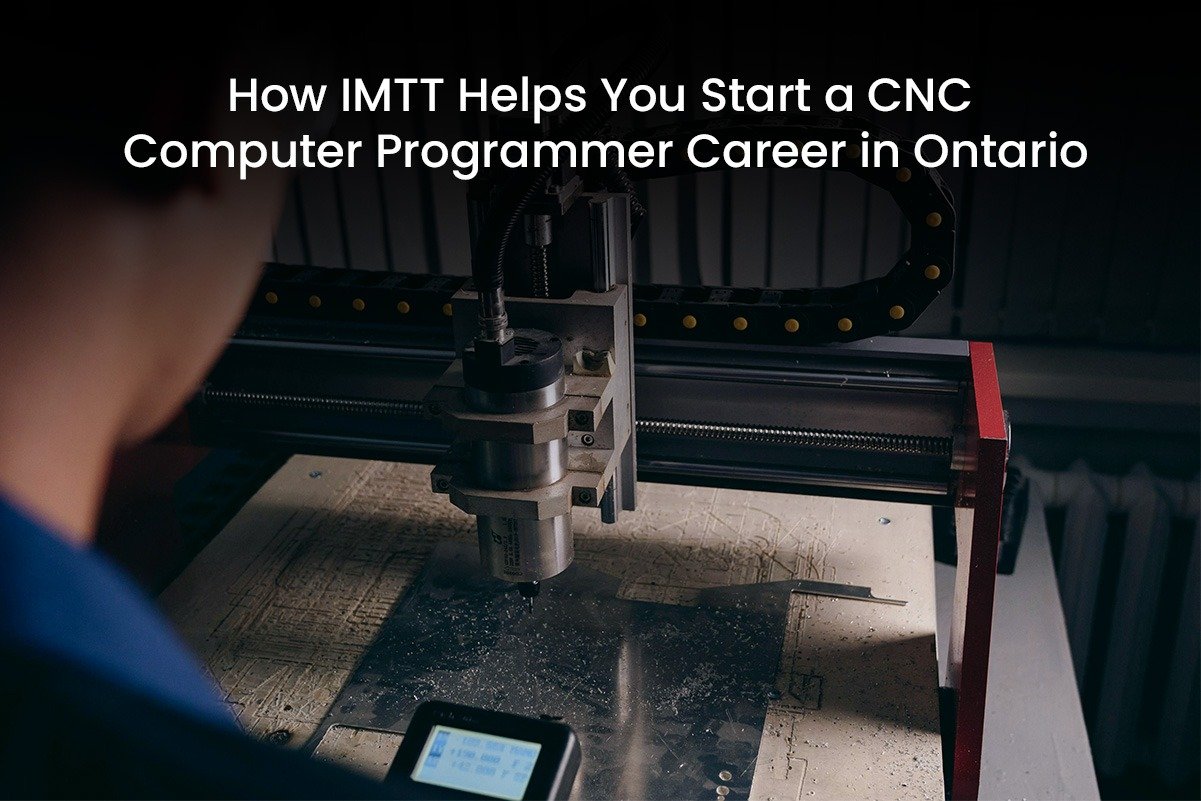
Some go deeper into the technical side. The CNC computer programmer role is one clear example. These professionals work between engineering and production.It carries long-term stability.
According to Job Bank Canada, experienced CNC programmers in Ontario can earn wages exceeding $40 per hour, depending on their skills and responsibilities.
Others go a different direction entirely. Some experienced tradespeople start their own operations. Others move into training, consulting, or quality management. The trades give you transferable skills that open more doors than most people expect.
At IMTT Canada, we encourage students to think past the first job from day one. The foundation built during training becomes the launchpad for a career that can grow in many directions. Book a consultation with our team to learn more.
The opportunity is there. What you do with it is up to you.